
What Size Dumpster Do I Need? A Myrtle Beach Homeowner's Guide
The single most common question we get — answered with real Myrtle Beach projects, not just numbers.
7 min read · Guides
Picking a dumpster size is the part of a project people most often get wrong, and it's easy to see why: a "20-yard" bin doesn't mean much until you can picture what actually fits in it. Rent too small and you're paying for a second haul; rent too big and you've paid for air. Here's how we help Myrtle Beach customers get it right the first time.
The quick answer
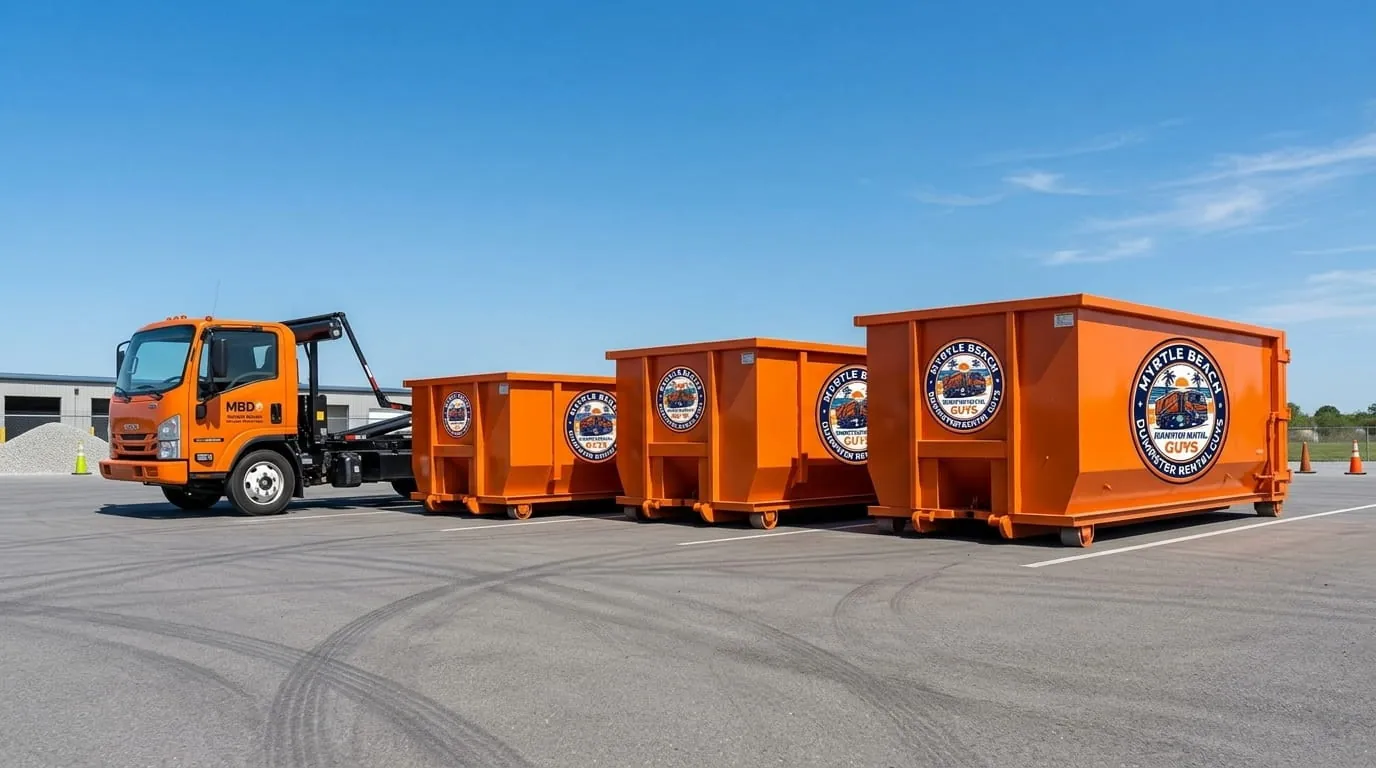
For most homeowners, the decision comes down to three bands. A 10 or 15-yard handles a single room or heavy material like concrete and roofing. A 20-yard — our most popular size — covers whole-room renovations and mid-size cleanouts. A 30 or 40-yard is for whole-home cleanouts, additions, and construction. If you're between two sizes, going one up is almost always cheaper than paying for a second pickup.
Matching size to real projects
10-yard: small but mighty
The 10-yard is low-walled and easy to load, which makes it perfect for heavy, dense debris where weight matters more than volume — a torn-out concrete patio, a small bathroom gut, or a single-layer roof tear-off. A full load of concrete or wet roofing shingles hits the weight limit long before the bin looks full, so don't let the modest size fool you.
15 to 20-yard: the renovation workhorses
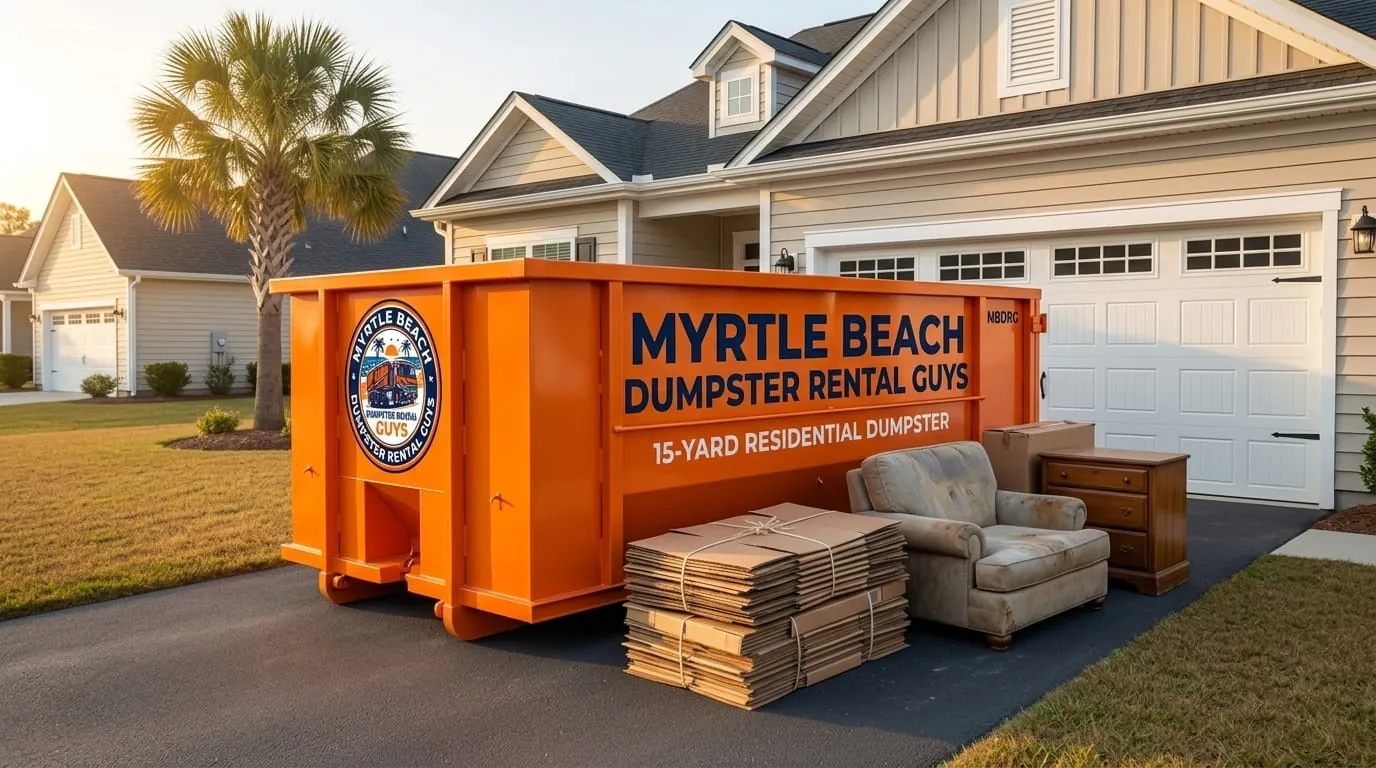
Most Myrtle Beach remodels live here. A flooring replacement across a couple of rooms, a kitchen refresh, a condo turnover, or a solid garage cleanout all fit comfortably. The 20-yard is the size we rent most often because it covers the widest range of jobs without overwhelming a driveway.
30 to 40-yard: the big jobs
When you're emptying an entire house, building an addition, or running new construction — common on the fast-growing streets of Carolina Forest and Forestbrook — debris accumulates faster than you'd believe. A 30-yard suits most whole-home cleanouts; a 40-yard is for major demolition and high-volume commercial work. These are also the sizes people reach for after a major storm.
Weight matters as much as volume
Every dumpster has both a volume capacity and a weight allowance, and heavy materials hit the weight cap first. Concrete, brick, roof shingles, and waterlogged storm debris are all far denser than household junk. That's why we bring a dedicated heavy-debris bin for those loads — it keeps the weight legal for the road and your price predictable.
When in doubt, call
You don't have to figure this out alone. Tell us your project, your ZIP, and roughly how much you're clearing, and we'll recommend a size in about two minutes — honestly, without upselling you into more bin than you need. Reach us at (854) 223-4256.
Questions? We're a phone call away
Whatever your project, we're happy to talk it through and give you a straight, flat-rate quote. Call (854) 223-4256 — we answer our own phones.
Related Guides
How Much Does Dumpster Rental Cost in Myrtle Beach, SC?
What goes into the price, what to watch for, and how flat-rate pricing saves you from surprise fees.
Read more →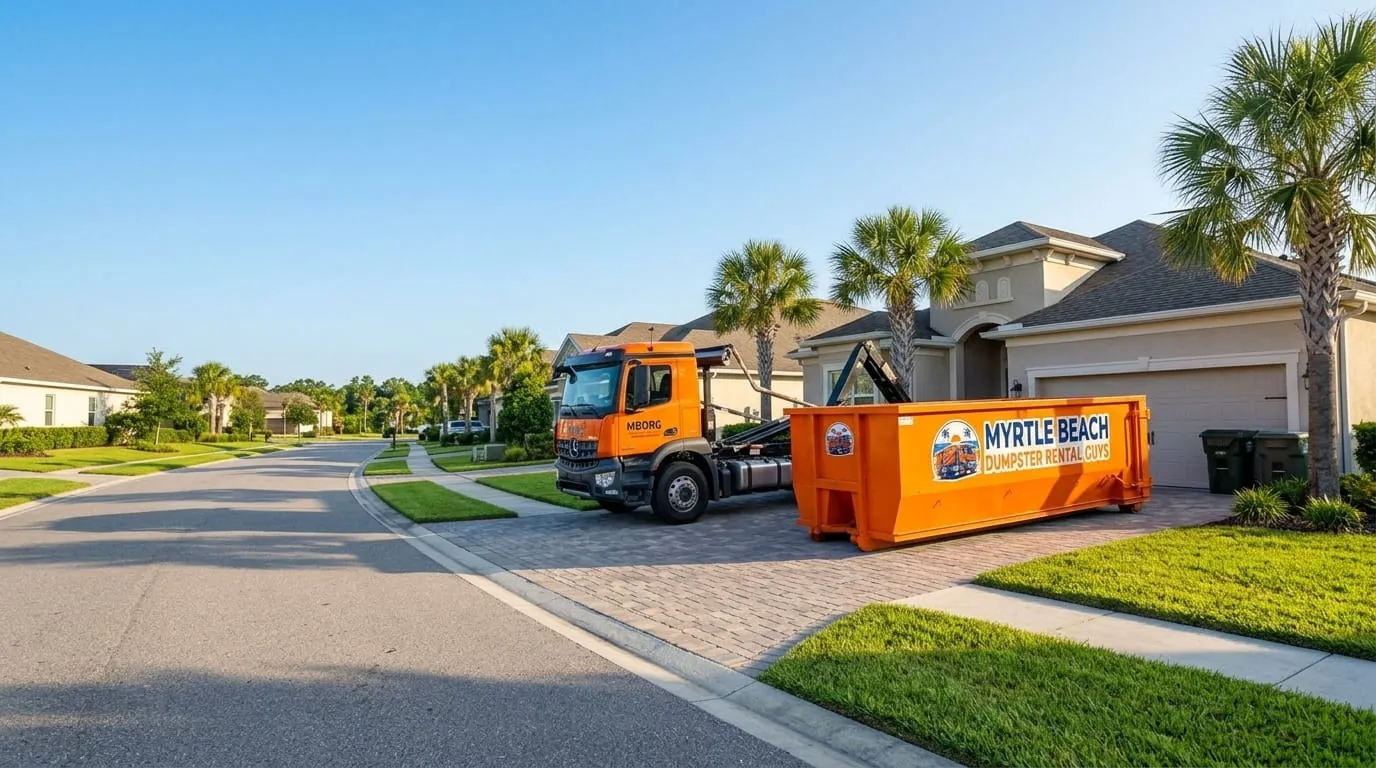
Do You Need a Dumpster Permit in Myrtle Beach, SC?
Driveway placement is usually permit-free; the public right-of-way may need a city permit. Here's the rule.
Read more →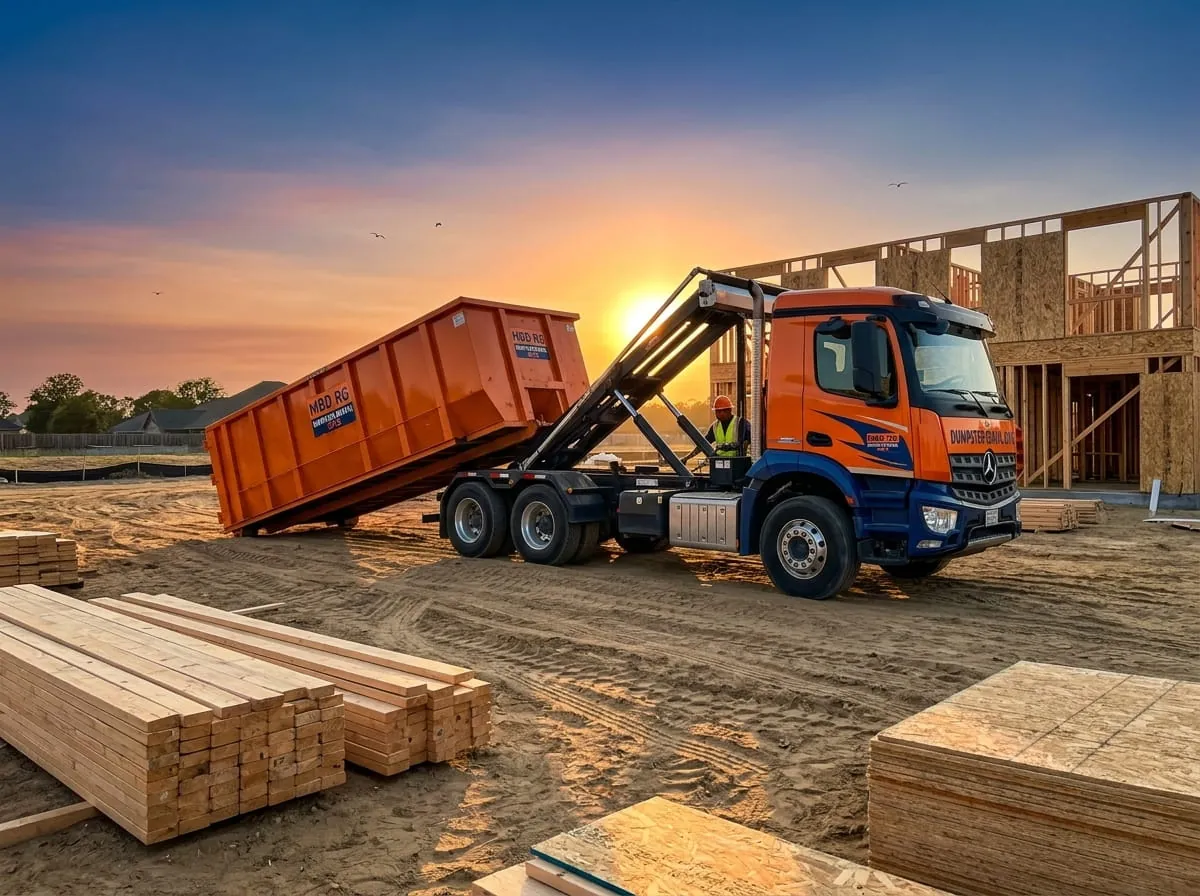
Construction Debris Disposal in Horry County: A Contractor's Guide
Where C&D debris goes in Horry County, what it costs, and how to keep a job site moving in one of SC's fastest-growing areas.
Read more →Ready to Book Your Dumpster?
Call now for a flat-rate quote and fast delivery across Myrtle Beach and the Grand Strand.
Call (854) 223-4256Frequently Asked
What's the most popular dumpster size?
The 20-yard is our most-rented size because it handles the widest range of home renovation, condo-turnover, and cleanout projects while still fitting most driveways.
Is it better to go bigger or smaller if I'm unsure?
Usually bigger. Paying for one size up costs less than paying for a second haul when a too-small bin fills up mid-project.
Does the type of debris affect which size I need?
Yes — heavy material like concrete and roof shingles hits the weight limit before the bin looks full, so those jobs use a smaller bin or a dedicated heavy-debris container.