
Hurricane & Storm Debris Cleanup: A Grand Strand Guide
On the Grand Strand, hurricane season is a fact of life. Here's how to handle the debris before and after a storm.
9 min read · Seasonal
If you live on the Grand Strand, you already know: hurricane season runs June through November, and Myrtle Beach has taken direct hits and near-misses before. When a storm passes, the cleanup can be overwhelming — downed limbs, ruined fencing, water-damaged interiors, and debris piled at the curb up and down the street. A dumpster on site is often the difference between a cleanup that drags on for weeks and one you can actually get ahead of. Here's the practical approach, before and after.
Before the storm: prep smart
The best storm cleanup starts before the wind arrives. If you have a project already generating debris, get it hauled before a storm is in the forecast — loose material becomes dangerous debris in high wind. If a major storm is genuinely bearing down, book early: demand spikes fast and both trucks and landfill capacity get stretched across the whole region.
After the storm: safety first
Before you haul anything, take care of the basics: watch for downed power lines, don't enter flood-damaged areas until power is off and they're checked, wear gloves and sturdy boots, and be cautious of standing water, wildlife, and mold. Water-damaged drywall and insulation often can't be salvaged and needs to come out fast to stop mold spreading through the structure — a real concern in the coastal humidity here.
What storm cleanup produces
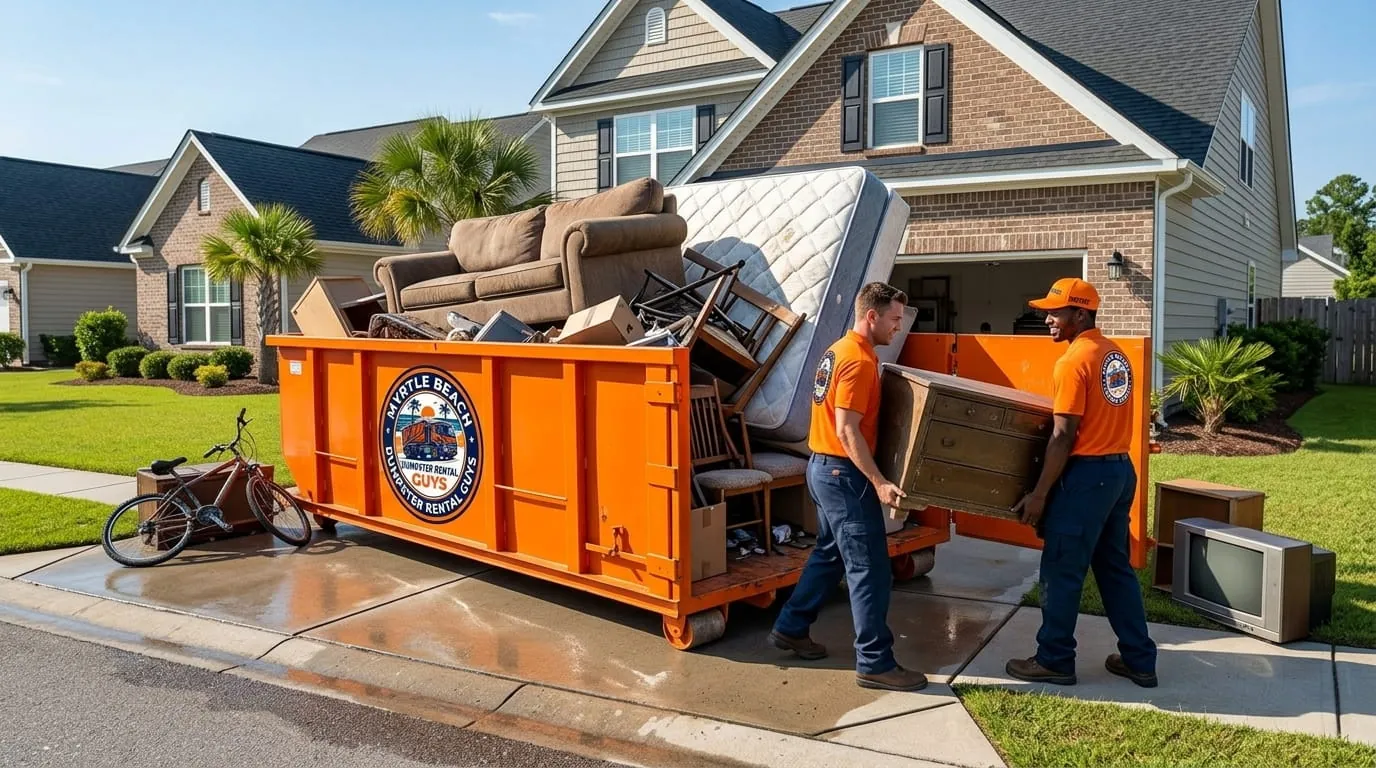
Downed tree limbs and yard debris, ruined fencing and screen enclosures, water-damaged drywall and flooring, soaked furniture and mattresses, damaged appliances, and roofing debris all pile up quickly. Between the structural material coming out of the house and the vegetation from the yard, the volume adds up faster than most people expect.
Sizing for a storm cleanup
For a significant hurricane or storm cleanup, a 30 or 40-yard bin is usually the right call — big enough to take gutted drywall, flooring, fencing, and ruined furnishings without a mid-job swap. For yard-only debris (limbs, brush, fence sections), a 20-yard often does it. Because water-logged material and wet debris are heavy, we'll talk through the weight so your load stays within limits and your cost stays predictable.
Separate what you can
Where possible, keep vegetative debris (limbs, brush) separate from mixed household debris — the Horry County landfill handles land-clearing and vegetative debris, and separating it can help. Set aside anything hazardous the storm may have disturbed: pool chemicals, paint, fuel, propane tanks, and damaged electronics all need a proper drop-off rather than the bin.
Act fast, but plan the drop
Mold sets in within a day or two in the coastal humidity, so speed matters. Because we're local to the Grand Strand, we can often get a bin to you quickly once roads are clear — but call early, as demand surges after a big storm. Tell us about access, especially if there's standing water, downed trees, or debris blocking the driveway.
We're here when the wind dies down
Storm cleanup is exactly when a fast, local dumpster company earns its keep. Call us at (854) 223-4256 and we'll get a bin to you so you can start putting things right.
Questions? We're a phone call away
Whatever your project, we're happy to talk it through and give you a straight, flat-rate quote. Call (854) 223-4256 — we answer our own phones.
Related Guides
What Size Dumpster Do I Need? A Myrtle Beach Homeowner's Guide
The single most common question we get — answered with real Myrtle Beach projects, not just numbers.
Read more →
How Much Does Dumpster Rental Cost in Myrtle Beach, SC?
What goes into the price, what to watch for, and how flat-rate pricing saves you from surprise fees.
Read more →
Do You Need a Dumpster Permit in Myrtle Beach, SC?
Driveway placement is usually permit-free; the public right-of-way may need a city permit. Here's the rule.
Read more →Ready to Book Your Dumpster?
Call now for a flat-rate quote and fast delivery across Myrtle Beach and the Grand Strand.
Call (854) 223-4256Frequently Asked
What size dumpster for hurricane cleanup?
A 30 or 40-yard suits most whole-property storm cleanups, since gutted drywall, flooring, fencing, and yard debris add up fast. Wet debris is heavy, so we'll help you stay within the weight limit.
Can you deliver quickly after a hurricane?
Often yes, once roads are clear. We're local to the Grand Strand, so we prioritize getting bins out fast after a storm — but call early, since demand surges.
Can storm-damaged chemicals and electronics go in the bin?
No. Pool chemicals, paint, fuel, propane tanks, and damaged electronics need a proper drop-off at a county convenience center. Everything else from the cleanup can go in the dumpster.